Ask a room of teachers whether differentiated instruction is worth doing, and almost nobody argues with the idea itself. Ask them how often they actually manage it for every lesson, and the room goes a lot quieter. The gap between those two answers isn't about belief — it's about time, and closing it takes more than good intentions.
Why differentiation works
The pedagogical case for differentiation isn't really in dispute. A class of twenty-five or thirty students reads at a range of levels wide enough that the same worksheet is, in effect, three or four different assignments in disguise — too easy for some, comfortably in reach for others, and genuinely out of reach for the rest. Tailor the complexity of the task to where a student actually is, and both ends of that range do better: the student who was guessing stays engaged instead of quietly checking out, and the student who finished in four minutes gets something that actually stretches them instead of a worksheet's worth of busywork.
None of this is new. It's been standard advice in teacher training for decades, and it shows up in nearly every instructional framework schools already claim to follow. The idea was never the hard part.
Why it rarely happens
The hard part is that differentiating a lesson properly means writing it more than once. Not tweaking a font size or reading the same questions aloud slower — actually producing a version with simpler phrasing and more direct questions for students who need it, and a version with more inference and interpretation for students who are ready for it, on top of the version already written for the middle of the class. For one lesson, on one day, that's manageable. Multiplied across every lesson, every week, for a full course load, it stops being manageable at all.
So in practice, differentiation usually happens informally instead — a teacher rephrasing a question on the spot for one student, or quietly lowering the bar in a one-on-one conversation — rather than as three actual worksheets sitting in three actual piles. That's not a failure of will. It's what happens when a genuinely good idea runs into a genuinely fixed number of hours in an evening.
What actually saves time
The strategies that hold up aren't about working faster on three separate documents — they're about not treating them as separate documents in the first place. The most useful version of differentiation keeps the same core content and the same underlying questions across every tier, and only adjusts how much scaffolding surrounds them: shorter sentences and more concrete phrasing at one end, more nuance and inference at the other. That's a much smaller task than writing three unrelated worksheets, and it's also the version that's actually fair — every student in the room is still working with the same material, just at a complexity they can engage with.
It's also, not coincidentally, a narrower and safer job to hand to AI than "write a lesson plan" is. Generating an entire worksheet from nothing still needs a teacher to fact-check and vet every line. Taking a text a teacher already trusts and producing the same style of question at a grade level above and below the one they picked is a much more contained transformation — closer to translation than to authorship, and easier to trust the result of.
Where LessonPilot fits
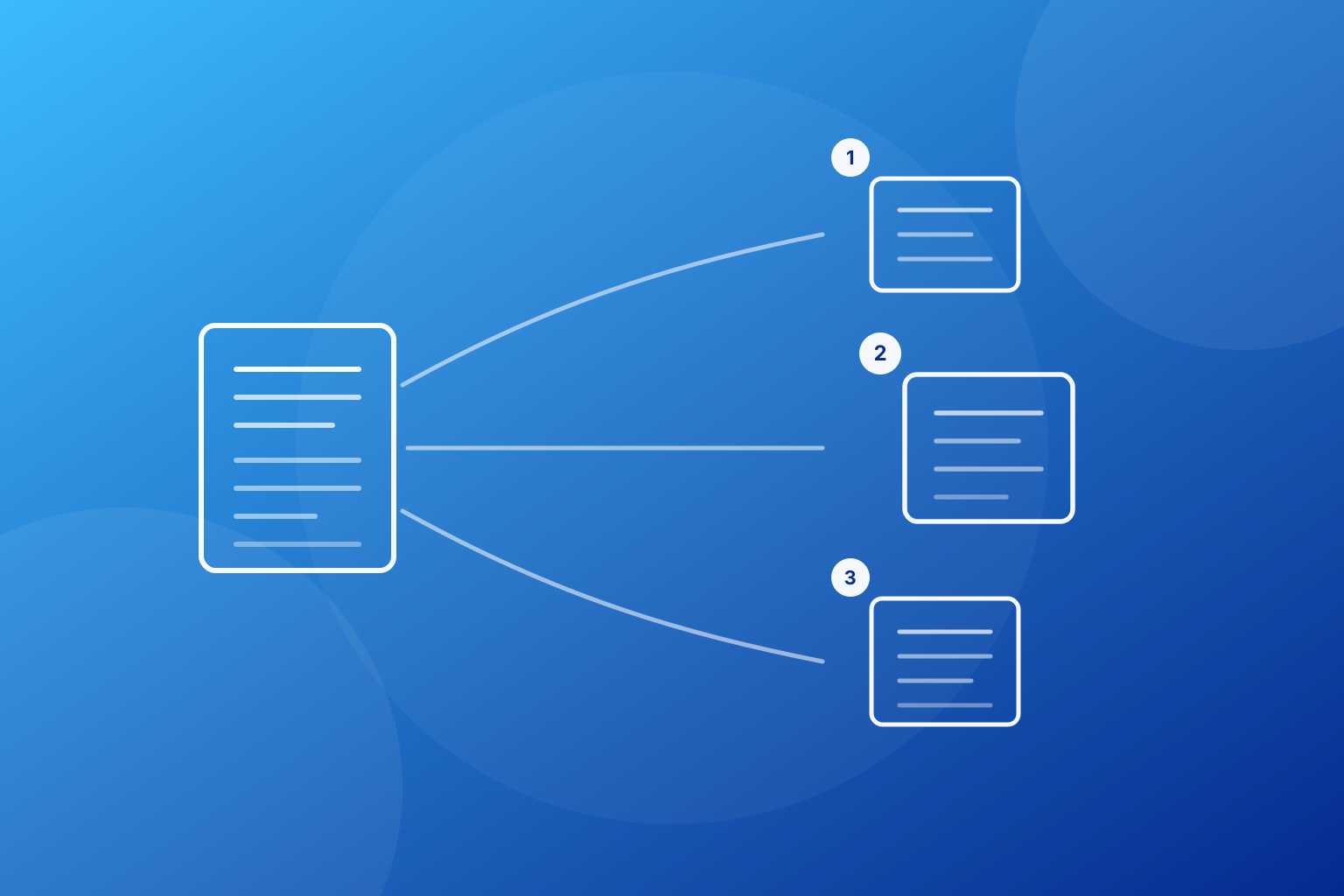
This is the reasoning behind LessonPilot's own differentiation toggle. Generate questions from a text the way you always would, flip on "Add differentiation," and instead of one worksheet you get three — one grade below, one at the grade you picked, and one grade above, all drawn from the exact same source text and covering the same content, just scaled in complexity. It's built to replace the evening of rewriting, not to replace the judgment behind deciding who gets which version.
We'd rather ship the part of differentiation that's mostly mechanical — restating the same questions at a different reading level, three times instead of once — and leave the part that actually requires knowing your students to the person who does: the teacher standing in front of them.
None of this makes differentiation effortless — it still takes a teacher who knows which student needs which version. What it can stop taking is an entire evening rewriting the same worksheet three times. Give that hour back, and differentiation stops being the thing that only happens when there's time left over.